

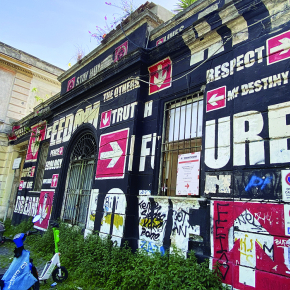
The green transition, with particular emphasis on urban approaches
#ZOOM SUR...
Socio-technical transitions are complex, non-linear and multi-dimensional processes that engage diverse societal actors and technological elements in the face of global challenges like climate change. These transitions are shaped by formal and informal regulations, social and technical norms, and standards of good practice. Their sustainability is therefore not just a technical issue — it also depends on social and environmental aspects. In the context of the relentless urbanization of modern societies and the vast majority of the world's population living in cities, transitions are crucial for securing the life-support systems that enable desirable societal functions. In this sense, the so-called urban green transition implies a shift toward sustainable, low-carbon and environmentally conscious urban development. This has been recognized in the Sustainable Development Goals (SDG) adopted by the United Nations as part of the 2030 Agenda for Sustainable Development: i.e. sustainable cities (SDG 17), climate action (SDG 13) and affordable and clean energy (SDG 7).
Collaboration between social sciences and humanities on the one hand, and natural and technological sciences on the other can play an important role in interpreting the challenges associated with socio-technical transitions. This requires an interdisciplinary approach that provides a systemic understanding of the challenges, enhances the effectiveness of institutional, social and technological innovations, raises awareness of key issues and promotes capacity building.
Major Research Themes for the Green Transition Agenda
Integrating social and environmental alternatives in urban contexts
This issue deals with the challenging tensions between sustainability and ecology, as well as the interplay between socio-technical and socio-ecological transitions. The 1992 Earth Summit framed sustainable development as an alternative to linear economic growth. However, addressing sustainability requires us to recognize conflicts in adapting production and consumption, inclusion and exclusion dynamics and inequalities. Successful environmentally sound urban transformations in the long-term depend on technological innovation, investments and fundamental shifts in rules and routines.
Minimizing carbon emissions and mitigating the thermal impact of the built environment
According to current understanding of socio-technical transitions as a multi-dimensional process, reducing carbon emissions and the thermal impact of the built environment requires the combination of technical solutions and social and environmental factors. This includes optimizing density for proximity, improving building materials to combat energy poverty and heat islands, preventing food deserts, shortening supply chains, increasing access to physical and digital resources and promoting urban agriculture.
Implementing nature-based solutions for harmonious human-wildlife coexistence
Urban encroachment has blurred the boundaries between human settlements and natural spaces, increasing human-wildlife interactions. This challenge has far-reaching implications for urban sustainability and biodiversity. Research highlights the need for nature-based solutions that balance human activities with ecological conservation, while managing invasive species. Viewing natural resources as ecosystem services fosters a post-anthropocentric perspective, promoting exchange between cities and nature.
Developing innovative governance models for societal and environmental challenges
Shaping new policies and governance models for social and environmental change require multifactor and multilevel approaches. Furthermore, new research-practice initiatives are essential to explore alternative governance strategies while prioritizing collective societal needs, adopting a complex systems perspective and fostering collaboration among diverse actors.
Adopting multi-level planning approaches to advance green transitions
While local adaptation is both scientifically acknowledged and technically feasible, large-scale implementation faces some barriers. Bottom-up practices like tactical urbanism, participatory planning and co-design have succeeded in overcoming the limitations of top-down policies and in achieving sustainable transitions' goals.
Enhancing collaboration across diverse actors
A key methodological challenge in this context is to effectively manage the uncertainty of socio-technical transitions while fostering cooperation between different actors. The combination of the co-production of knowledge and mutual learning represents a crucial approach. The complex and uncertain nature of ongoing transitions calls for the promotion of knowledge production through interdisciplinary and transdisciplinary methods, as well as the adoption of innovative research methodologies.
Promoting environmental justice in green transitions
Integrating social innovation alongside technological solutions ensures that the costs and benefits of the green transition are fairly shared across all regions and communities. In the short term, the current generation will bear most of the costs of the green transition, through financial sacrifices, lifestyle changes, or adapting to new infrastructure. Policies that ignore the socio-economic impacts on vulnerable communities risk deepening inequalities and resistance to sustainability. To mitigate these risks, pursuing an equitable green transition and making these efforts visible to the broader public is crucial.
SWOT Analysis for Potential Research on Socio-Technical Transitions within the Horizon Europe (HE) Framework
Strengths to build on:
Interdisciplinary and transdisciplinary approaches: The emphasis on combining natural and social sciences creates a comprehensive framework for addressing complex sustainability challenges.
Adaptability and local sensitivity: The focus on place-sensitive, bottom-up practices ensures that policies and solutions are tailored to specific regions and communities, enhancing relevance and effectiveness.
Potential for social innovation: The integration of participatory processes and community engagement can foster inclusive, equitable and sustainable transitions.
Understanding regional diversity: Recognizing the importance of geographical, cultural and socio-economic contexts helps tailored solutions and avoids one-size-fits-all approaches.
Weaknesses detected:
Uniform approach of HE: The EU framework’s failure to account for regional variations in socio-economic, cultural and environmental contexts leads to less effective policy implementation.
Institutional barriers to interdisciplinarity: Rigid disciplinary boundaries and funding schemes within HE hinder collaboration across sectors, limiting the scope of research and innovation.
Exclusion of smaller actors: The complex and bureaucratic nature of HE challenges smaller actors like grassroots organizations and rural communities, potentially leading to imbalanced participation and exclusion of critical perspectives.
Slow systemic transformation: The pace of change in key sectors like energy, transportation and agriculture is slow, with funding cycles and political resistance impeding progress.
Opportunities ahead:
Place-sensitive solutions: Promoting territorial regeneration and urban-rural balance can create localized, scalable and context-specific solutions to sustainability challenges.
Community-led regeneration: Grassroots initiatives in urban regeneration and ecological transformation have the potential to trigger broader social and environmental change.
Innovation in rural areas: Sustainable agriculture and environmental management in rural areas that enhances food security, preserves ecosystem services and can produce innovation in urban-rural linkages.
Inclusive decision-making: The emphasis on participatory processes and collaborative design approaches can enhance publicness and democratic legitimacy, as well as fostering sustainable policies.
Threats to avoid:
Urban-rural divide: Urban-rural divide, both in terms of policy and socio-economic impacts, could exacerbate inequalities and hinder collaborative efforts towards green transitions.
Political and economic resistance: National priorities and political resistance could slow or derail the implementation of green transition policies.
Environmental injustices: Without careful consideration of regional differences, policies may inadvertently worsen urban-rural inequalities, leading to unequal distribution of benefits and burdens of the green transition.
Cultural and psychological barriers: Transitions require changes in people’s routines and mental shifts that may be challenging. These difficulties may be exacerbated by current divides and social stratification dynamics.
Recommendations
In order to address socio-technical changes towards sustainability, it is necessary to introduce new ontologies, methodologies and operational tools linking research to different levels of transition. There is a need for specific interdisciplinary programmes that focus on how transitions are place-sensitive processes, with their pace and possible governance, and how they relate to equity and social inclusion. Such programmes should ensure inclusive decision-making processes through civic engagement and capacity building, in order to empower local actors and promote informed policy-making. In this regard, recent global challenges have spurred Transformative Innovation Policies (TIPs) that address climate change, social inequality and sustainable development.
As far as the collaboration between the CSIC, the CNRS and the CNR is concerned, two main areas of convergence can be identified: firstly, the conceptualization of the major societal challenges associated with green transitions and, secondly, the development of joint research fieldwork in the Mediterranean region.
We recommend future research focus on the following domains:
Energy transition, focusing on renewable energy, social innovation, energy communities and urban-rural interactions related to land use.
Ecosystem services fostering exchange between urban and rural areas for a balanced and fair green transition.
Sustainability in the agri-food chain in terms of production, access to healthy and affordable food.
Sustainable mobility by promoting public transport, while taking into account the democratic component of free movement
New governance models to explore how socio-ecological and technical systems adapt to emerging urban and rural challenges.
Míriam Acebillo-Baqué (INGENIO-CSIC-UPV), Giuseppe Calabrese (CNR-IRCRES), Francisco Colom (CSIC-IFS), Gabriella Esposito (CNR-IRISS), Jenny Anne Glikman (CSIC-IESA), Philippe Hamman (CNRS-SAGE)