Science for Diplomacy and international relations: scientific, cultural, educational and artistic transfers
#ZOOM SUR…
In the current global context, it is essential for the European Commission (EC) to enhance its capacity to advance research on and for science diplomacy (SD). Understanding SD and promoting research that explicitly generates actionable knowledge and tools for practitioners engaged in this field is of paramount importance.
While the practice and research of SD are expanding globally, Horizon Europe (HE) has not fully sustained the progress achieved under H2020. The next EU Framework Programme for Research & Innovation (FP10) should continue to foster excellent research on and for SD, developed in close collaboration with practitioners at the EU level. Building on previous theoretical research and networking efforts, FP10 should now focus more on addressing critical challenges.
What is Science Diplomacy, and Why Does it Matter?
What is SD (sometimes referred to as Scientific Diplomacy)? Why is it relevant in a world marked by global challenges and geopolitical tensions? And what forms of knowledge can be mobilised to study this emerging field of practice?
While theoretical analyses and cases in point — such as EU cooperation programmes in African countries — have long addressed these questions, SD has recently gained significant attention. The growing role of science and technology in public policy and international relations, the complex interconnections between state and non-state actors intensified by globalisation, and the rise of multifaceted global challenges — ranging from climate change and food security to pandemics and migration — have all underscored the need for evidence-based policy responses. These dynamics have fuelled interest in the mutual influence of science and diplomacy, contributing to the emergence of SD as a distinct field where scientific and foreign policy interests intersect.
SD’s hybrid nature positions it at the crossroads of science and international politics. On one hand, it draws legitimacy from the public image of science as a universal, non-partisan endeavour, committed to rational, transparent, and objective problem-solving. On the other, diplomacy — understood as a non-violent approach to managing international relations through dialogue, negotiation, and compromise — inevitably involves the protection and promotion of specific interests. Diplomacy seeks to achieve balanced outcomes, ensuring that all parties can claim some measure of success, even in the absence of coercion.
These universalist and particularist dimensions coexist within SD and are balanced in varying ways. Their interplay depends on whether the activities involved serve national interests, address transnational concerns, or respond to genuinely global challenges. This inherent political dimension distinguishes SD from broader international scientific cooperation. While the latter is primarily concerned with advancing scientific knowledge, SD frames scientific engagement within strategic national or international foreign policy objectives.
Under Horizon 2020 (H2020), the EU actively promoted SD as a research and policy agenda. Between 2016 and 2022, three international collaborative research projects were funded, leading to the creation of the EU Science Diplomacy Alliance. This platform has become a key meeting point for practitioners and researchers, fostering dialogue and collaboration across the field.
A page dated 16 March 2022, on the official site EU - External Action succinctly, and quite elusively, defined SD as a tool for facilitating international scientific collaboration via diplomatic action, advancing diplomatic objectives (e.g. building bridges between nations) with science as soft power, and supporting directly diplomatic actions (for instance offering scientific advice and helping decision-makers choose the best policies). In February 2025, the European Commission published a much more detailed expert report titled “A European Framework for Science Diplomacy”, where SD also includes the use of diplomatic skills and tools in the practice of science. This report makes clear that science should be understood broadly, with the humanities and social sciences (HSS) being fully part of it. However, programmes promoted by the EU Science Diplomacy Alliance have also started to welcome actions on Cultural Heritage (CH) (e.g.: Panel discussion on the role of science diplomacy in cultural heritage protection on 26 September (EUTOPIA Science Diplomacy Seminar).
However, European SD cannot only be about scientific relations within Europe and Global North countries. More particularly, it must be a way to reinforce international relations with North African, Sub-Saharan and Middle East countries from an equitable perspective — because we are all researchers — and avoiding the very common assumption of the Big North acting charitably to the Big South.
Furthermore, SD also opens up scientific cooperation as a great opportunity to develop collaborative research projects among our institutions (CNRS, CNR and CSIC) and countries on the South shore of the Mediterranean and Sub-Saharan area.
Challenges
As outlined in the Introduction, one of the weaknesses of SD is its limited promotion within European framework programmes for research and innovation, with only three calls issued and funded to date. And yet, strengthening Europe’s role in the global arena requires relationships between continents and countries to be enhanced through approaches grounded in the Humanities and Social Sciences (HSS) and diplomatic engagement.
SD offers a unique opportunity to build bridges that can promote more constructive and horizontal international relations, showing the real interest for Europe of collaboration and offering training and mentorship in fields related to HSS. In this sense, different calls can stimulate SD in areas considered a priority for the EU. Examples include Sub-Saharan Africa or the Mediterranean which are both part of crucial global links and illustrate the fact that networking and training are what is needed is in many African countries (Figure 1). Museums and Cultural Tourism are two very relevant topics for Spain, France and Italy which have great potential through offering extraordinary training and mentoring. Both can be very useful from the standpoint of diplomacy as they are ways of extending peaceful narratives of Cultural Heritage (CH). Experts from the Humanities can offer a very innovative approach to SD through both tangible and intangible CH.
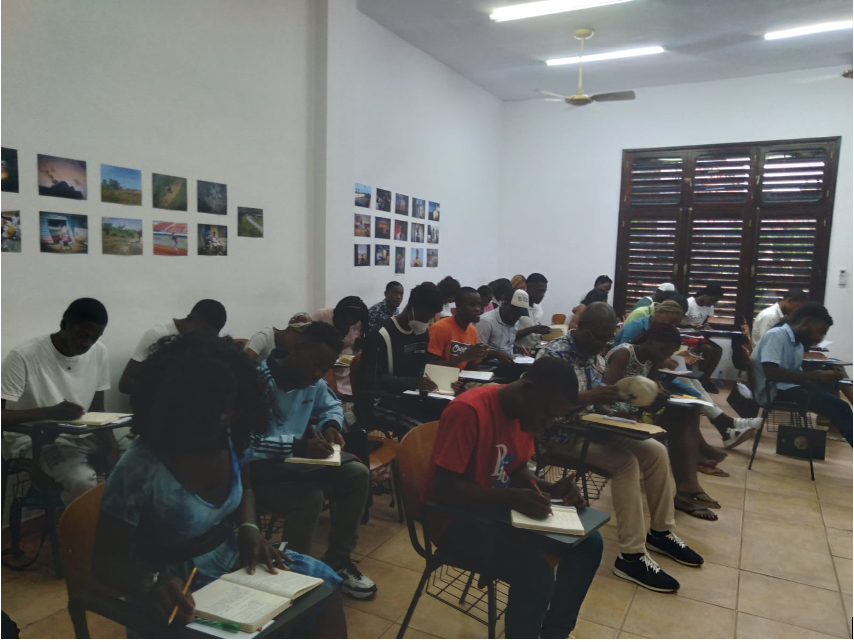
In addition, training programmes will qualify a new generation of researchers and/or professionals in different areas like developing skills, capacities, networks and joint research programmes between research organisations and institutes. Collaborative research training programmes could offer the opportunity of gathering input from local researchers and the possibility of approaching topics from -emic and 'etic perspectives. These two activities will increase and improve critical mass.
Recommendations for the FP10
Scientific research plays a fundamental role in the achievement of the objectives of the EU and its Member States. The expansion of knowledge drives improvement of industry, healthcare and technologies but it also paves the way for public policies that are better designed and implemented. If Europe wishes to have a chance to maintain its economic and social standards in an increasingly competitive environment, support for scientific research needs to be maintained, if not enhanced.
This argument holds also true for the HSS. With the current state of international relations, the EU particularly needs to strengthen ties with its partners in general. Research reinforces the perception of the EU as a reliable partner that treats others with respect with the goal of mutually beneficial development. The HSS highlight the potential of the scientific community to implement this approach, and add to the credibility of the EU policies as perceived by our partners.
Hence, our institutions (CNR, CNRS, CSIC) believe that it is imperative that sufficient funding be granted for scientific research. In the current context, Europe needs to be prepared for rising tensions so building blocks for a long-term perspective of cooperation shall remain our main approach. At the same time, we stand ready and willing to rise to the occasion and enhance our international cooperation with neighbouring partners. We accept the challenge of increasing the interdisciplinarity of research to enhance our responses to the requirements of our societies.
To this end, further support to SD would be greatly beneficial. Funding for training and networking of scientists, diplomats and politicians in this domain would boost the impact of research results significantly – with only a moderate investment required. But the EC should engage also in backing HSS issues, allocating more financial support, funding a greater number of projects, and giving greater prominence to subjects that until now have often been considered ancillary to hard sciences.
Promoting proposals centred on HSS could offer European knowledge and experience to help countries preserve and exhibit their CH, thus supporting the development of sustainable tourism to their regions (Figure 2). The advantage of both topics in the case of African countries is that many need mentoring of this kind as regards CH and tourism. Projects promoting these topics can strengthen their community economies thanks to visitors and tourists while also reinforcing and preserving their own cultures.
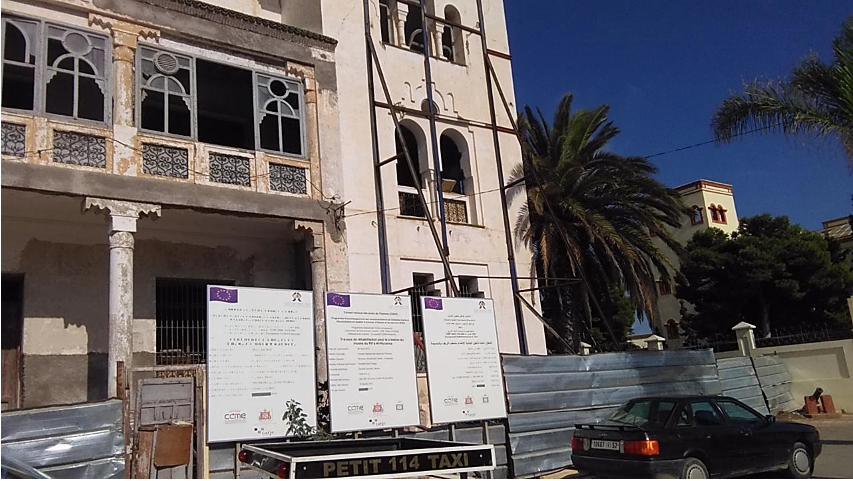
The previously quoted “European Framework for Science Diplomacy” concludes with a recommendation to “advance the frontiers of SD”, both as a concept and practice, “through research”. Indeed, SD research cultivates reflexivity and provides efficient tools to assess the role of scientific and technological developments in international relations. For this reason, SD could be considered as a cluster per se in the new strategic plan of FP10, centred on both topics underlined above. As a cluster it would be possible to ‘unpack’ the various issues involved like enhanced education and training for Science Diplomacy, or to share best practices for the sustainable preservation of CH by diffusing them in countries where they are liable to improve the quality of life of the subjects involved, as discussed for Africa. Research projects on and for SD could be co-developed with practitioners and stakeholders. Collaborative projects between the CNRS, CSIC, and CNR on SD usually rely on individual researchers' networks because of limited financial support and the marginal position of HSS within the broader research landscape. This opportunity for collaboration is therefore warmly welcomed. The Working Group can serve as a focal point for discussing joint projects and could evolve into an annual forum for updating and exchanging ideas.
Yolanda Aixelá Cabré (CSIC-IMF), Montserrat Benítez (CSIC-EEA), Isabella Cecchini (CNR-ISEM), Juan Ignacio Iquino (CSIC), Léonard Laborie (CNRS-SIRICE), Alessia Scognamiglio (CNR-ISPF)